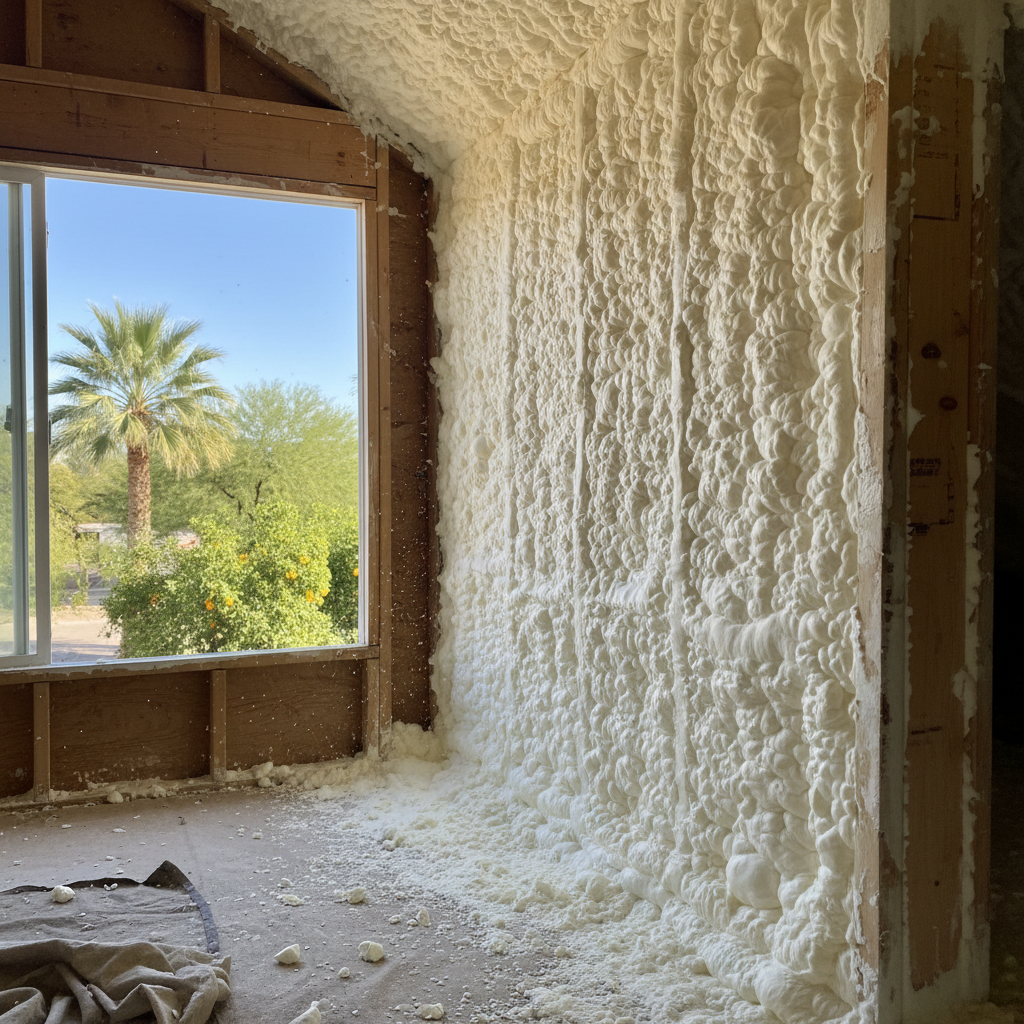
What exactly is open cell spray foam, and how's it different from closed cell?
Alright, let's get this straight from the jump. Open cell spray foam is a type of insulation that, once it cures, has a bunch of tiny, interconnected air pockets. Think of it like a sponge – it's soft, flexible, and air can move through it, though it slows it way down. It's usually a lower density product, expands a lot when it's sprayed, and it's fantastic for air sealing. Closed cell, on the other hand, is much denser. Its cells are closed off, like a bunch of tiny, sealed balloons. That makes it rigid, a vapor barrier, and gives it a higher R-value per inch. You'll often see closed cell used in places where you need structural integrity or a vapor barrier, like exterior walls or crawl spaces that might get damp. For attics and interior walls in a place like Gilbert, open cell is often the go-to because it's more cost-effective and still does an incredible job with air sealing and thermal performance.
Is open cell spray foam really worth the cost compared to traditional insulation?
This is a question I get all the time, and it's a fair one. Upfront, yes, spray foam, open cell included, is going to cost more per square foot than fiberglass batts or blown-in cellulose. No two ways about it. But here's where you need to look at the bigger picture for your Gilbert home. Traditional insulation just slows heat transfer; it doesn't really stop air leakage. Open cell spray foam, when applied correctly, creates an airtight seal. That means your AC isn't fighting a losing battle against every crack and gap in your attic or walls. You're going to see a noticeable drop in your energy bills, often enough to offset that initial investment over a few years. Plus, it improves indoor air quality by keeping dust and allergens out, and it makes your home feel way more comfortable, with fewer hot and cold spots. For me, it's not just about the insulation; it's about the whole home performance upgrade.
Can open cell spray foam help with soundproofing?
You bet it can. While it's not its primary job like, say, a dedicated soundproofing panel, open cell spray foam does a really good job at reducing sound transmission. Because of its soft, sponge-like structure and those interconnected air pockets I mentioned earlier, it absorbs sound waves rather than letting them bounce around or pass straight through. If you've got a noisy teenager's room, a home office where you need quiet, or you just want to dampen the sounds from a busy street, insulating interior walls with open cell can make a significant difference. It's not going to make a room totally silent, but it'll definitely make it a lot quieter and more peaceful. It's a nice bonus on top of the energy savings.
What about pests? Does open cell spray foam attract or deter them?
This is a common misconception, so let's clear it up. Spray foam, whether open or closed cell, doesn't provide a food source for pests. They can't eat it, and they don't want to live in it. In fact, it does a fantastic job of deterring them. Think about it: traditional insulation like fiberglass or cellulose can be a cozy nesting ground for rodents, insects, and other critters. They can tunnel through it, build nests, and generally make a nuisance of themselves. Spray foam, because it expands and seals every gap, crack, and crevice, eliminates those entry points and nesting spots. It creates a solid barrier that pests simply can't get through or live in. So, in terms of pest control, it's actually a huge advantage for your home.
How long does open cell spray foam last in a Gilbert attic?
When it's installed right by a professional outfit like Gilbert Spray Foam Insulation, open cell spray foam is designed to last the lifetime of your home. Seriously. Once it cures, it's stable. It doesn't settle, sag, or degrade like some other insulation materials can over time. Here in Gilbert, with our intense summer heat, that's a big deal. You don't want insulation that's going to break down after a few years and leave you with hot spots and high energy bills again. It maintains its R-value and its air-sealing properties for decades. It's not something you'll have to worry about replacing down the line, which is a huge peace of mind for any homeowner.
Is open cell spray foam safe for my family and pets once it's installed?
Absolutely. This is another one that gets people worried, and I understand why. When spray foam is being applied, there's a chemical reaction happening, and you definitely don't want to be around that. That's why our crews wear full PPE, and we make sure the area is completely clear during application. But once it's cured – and that typically happens within 24 hours, though we recommend staying out for a bit longer just to be safe – it's inert. It's not off-gassing anything harmful, and it's perfectly safe to be around. It's actually used in a lot of places where air quality is critical, like hospitals and schools, because it helps seal out allergens and pollutants. We use products that are tested and certified for indoor air quality, so you can breathe easy once it's in.
Can open cell spray foam handle the extreme heat we get in Gilbert?
It's built for it, honestly. Our summers here in Gilbert are no joke, with temperatures consistently hitting triple digits. Open cell spray foam excels in these conditions precisely because of its superior air-sealing capabilities. Heat transfer happens in three ways: conduction, convection, and radiation. While spray foam handles conduction well, its real superpower is stopping convection – that's the movement of hot air into your cooler home. By creating an airtight barrier in your attic, it prevents that superheated attic air from radiating down into your living space, and it stops your conditioned air from escaping. This means your AC unit doesn't have to work nearly as hard, even on those 115-degree days, leading to a much more comfortable home and lower utility bills. It's one of the best investments you can make to combat our desert climate.